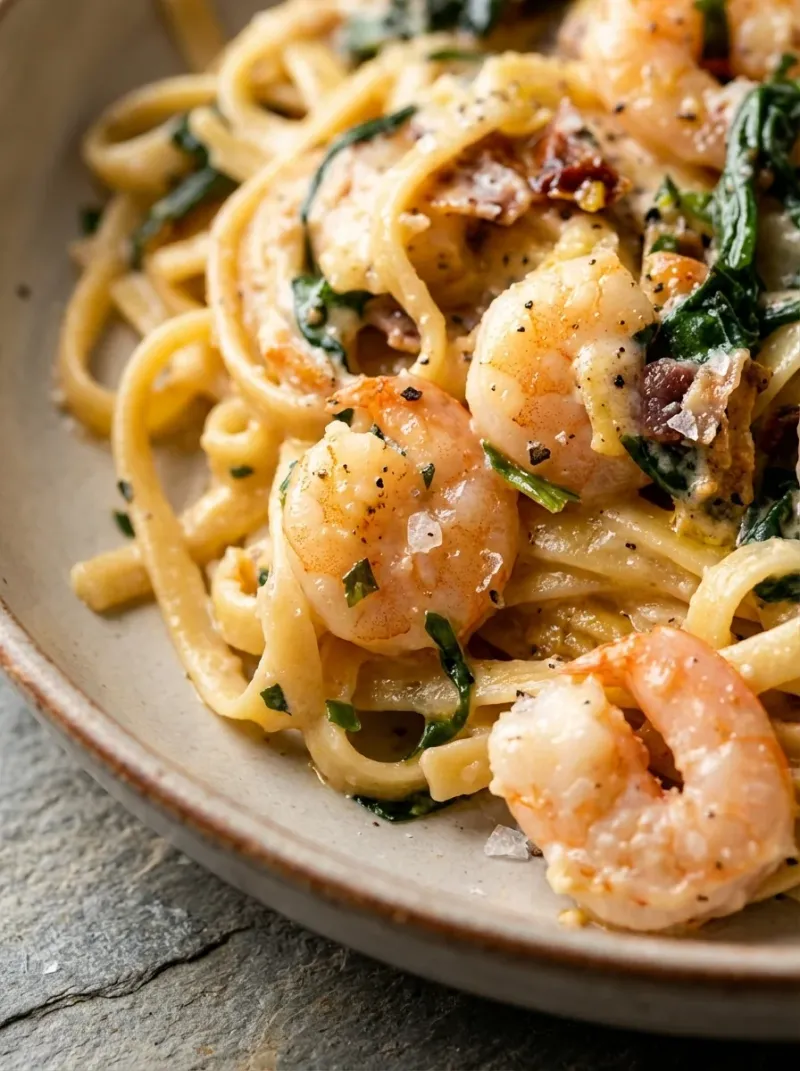
Well, I remember the first time I made this dish on a rainy Thursday. The kitchen smelled of garlic and fresh basil, and the shrimp sizzled like tiny fireworks. It was simple, honest, and, wow, so satisfying. If you’ve ever wondered how to turn ordinary linguine into something special, you’re in the right place.
The essence of the dish
It’s the marriage of creamy, buttery sauce with the briny bite of shrimp, wrapped in al dente linguine. The subtle sweetness of sun‑dried tomatoes and the fresh herb aroma create a comforting, yet elevated experience.
A fun fact or historical angle
Tuscan cooking traditionally relied on what the land and sea provided. Shrimp, though not a staple in the hills, became popular after coastal trade expanded, adding a splash of oceanic flavor to inland pasta dishes.
Flavor or sensory focus
You’ll first notice the warm garlic scent, then the creamy richness that coats the pasta, followed by the bright pop of lemon and herb freshness.
You Must Know
- Do not over‑salt the sauce; the cheese already adds saltiness.
- Use fresh basil for the best aroma.
- Add shrimp at the right moment to keep them tender.
Remember, the sauce will keep its silkiness if you keep the heat moderate and stir gently. I always finish with a drizzle of extra‑virgin olive oil; it adds a subtle fruitiness that rounds the whole plate. Serve with a simple green salad, and you have a dinner that feels both indulgent and homey.
The story behind it
The origins of Tuscan cuisine trace back to simple farmhouse meals where ingredients were fresh and seasons guided the pantry. This recipe draws on that heritage, marrying the sea’s bounty with the sun‑dry sweetness of tomatoes. It’s a quiet tribute to a region where meals are celebrated with modest elegance, never rushed, and always shared.
Why You'll Love It
- Creamy sauce that clings lovingly to each strand
- Shrimp that stay juicy, never rubbery
- Sun‑dried tomatoes add a subtle, sweet depth
- Fresh basil and parsley give a bright finish
Tips for success
- Don’t overcook shrimp; it turns rubbery fast.
- Reserve pasta water to help the sauce cling.
- Add lemon juice at the end for a fresh lift.
Professional secrets
- Use room‑temperature shrimp for even cooking.
- Finish the sauce off the heat to keep it silky.
- Grate Parmesan directly into the sauce for better emulsification.
Common mistakes to avoid
- Overcooking shrimp, which makes them rubbery.
- Boiling the sauce too vigorously; it can separate.
- Adding too much salt before tasting the finished dish.
Substitutions
- Heavy cream: Full‑fat coconut milk. Gives a dairy‑free alternative with a slight coconut note; reduce lemon juice slightly.
- Parmesan cheese: Nutritional yeast. Provides cheesy flavor without dairy; use 2‑3 tbsp.
Variations
- Spicy Version: Add 1/2 tsp red pepper flakes and a dash of hot sauce for a gentle kick.
- Mediterranean Style: Stir in kalamata olives, feta crumbles, and a handful of arugula just before serving.
Storage
Store leftovers in an airtight container in the refrigerator for up to 2 days. Reheat gently, adding a splash of milk or broth.
Make ahead
You can sauté the shrimp and store them separately. Keep the cream sauce in the fridge and combine with cooked pasta just before serving.
Leftovers
Reheat gently in a skillet on low heat, adding a splash of milk or broth to revive the sauce.
Serving ideas
- Serve in shallow bowls with a side of crusty garlic bread.
- Pair with a light arugula salad tossed in lemon vinaigrette.
- Garnish with extra basil leaves and a dusting of Parmesan.
Allergy information
Contains shellfish, dairy, and gluten.
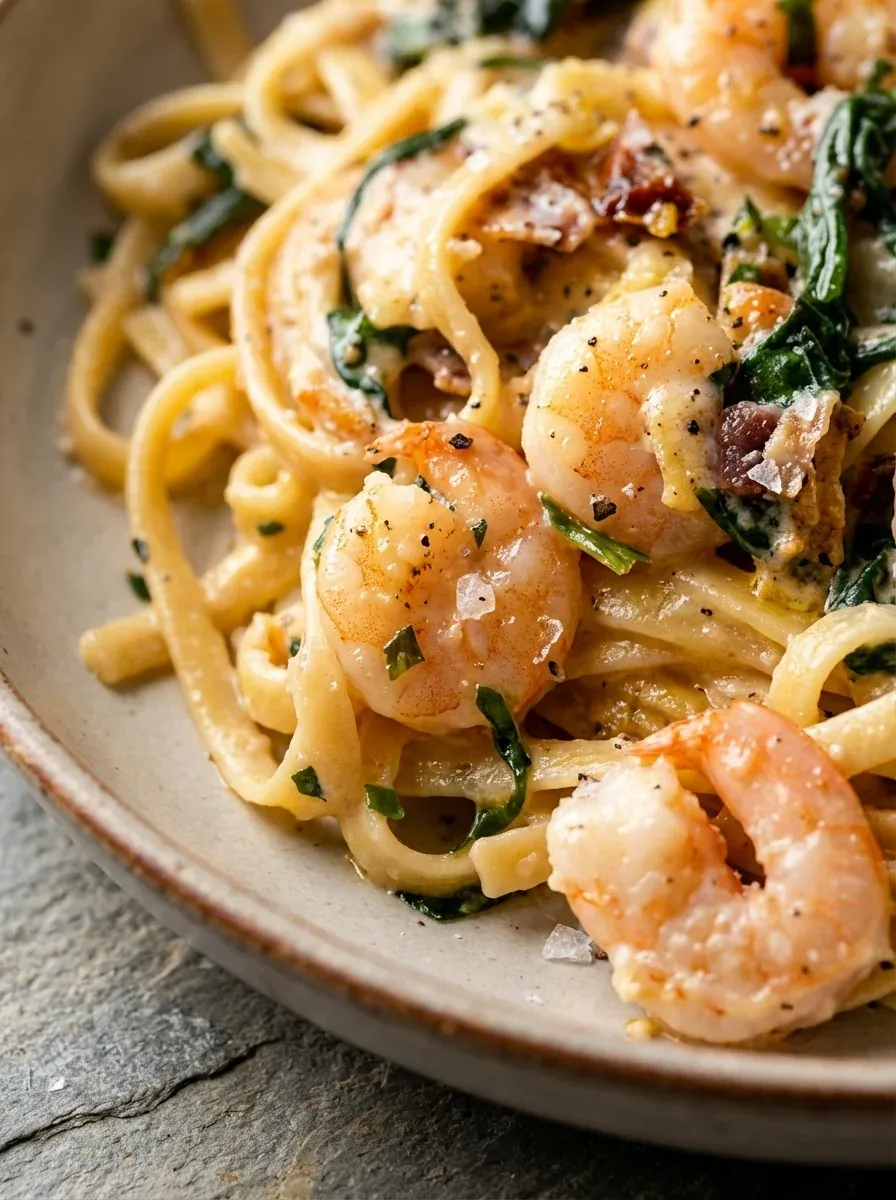
Creamy Tuscan Shrimp Linguine
A rich, garlicky linguine tossed with sweet sun‑dried tomatoes, fresh herbs, and succulent shrimp in a velvety cream sauce.
- Prep time
- 15 min
- Cook time
- 20 min
- Total time
- 35 min
- Difficulty
- Easy
- Cuisine
- Italian
- Course
- Main Course
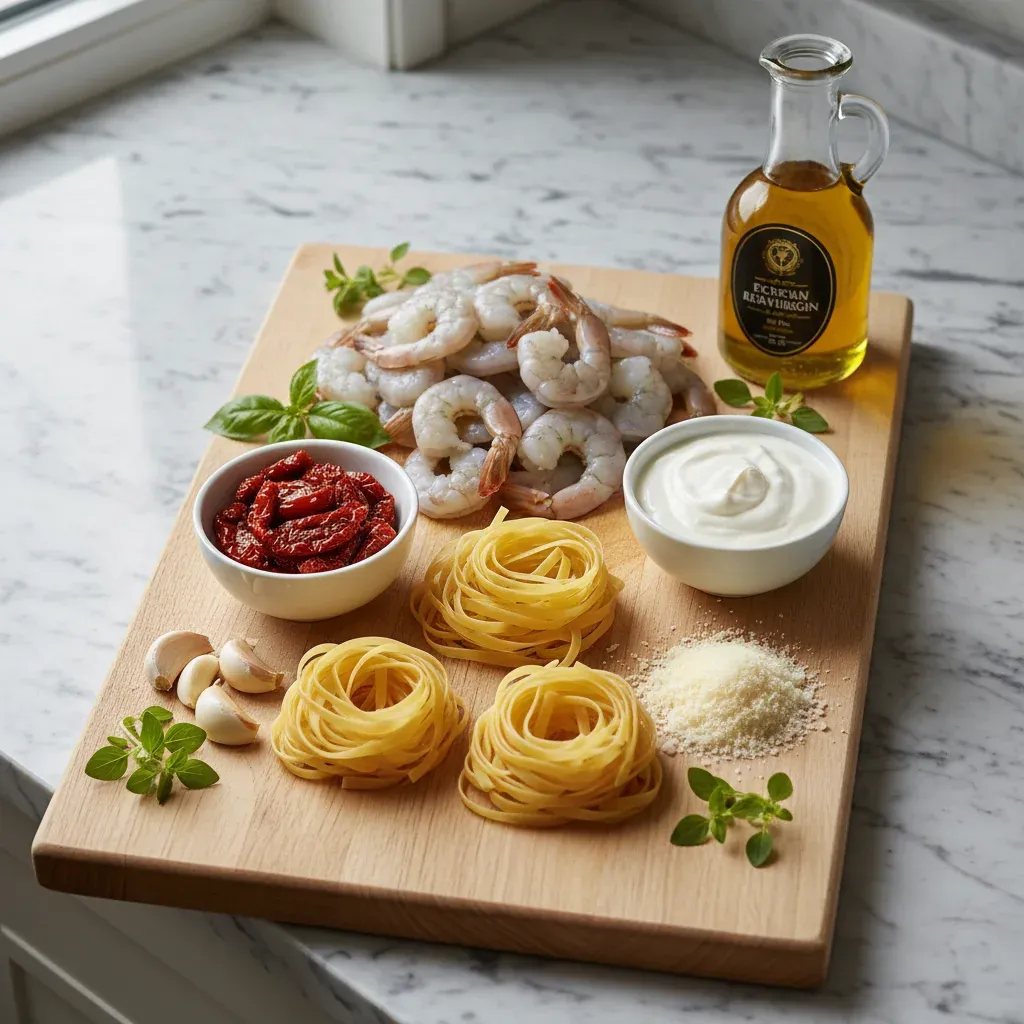
Ingredients
Main Ingredients
For the Garnish
Instructions
- 1
Bring a large pot of salted water to a boil, add linguine, and cook until al dente. Reserve 1 cup of pasta water, then drain.
- 2
Meanwhile, melt butter in a large skillet over medium heat. Add minced garlic and sauté until fragrant, about 30 seconds.
- 3
Add the shrimp to the skillet, season with a pinch of salt, and cook until pink on both sides, roughly 2‑3 minutes per side. Remove shrimp and set aside.
- 4
Stir sun‑dried tomatoes into the pan, then pour in the heavy cream. Bring to a gentle simmer, letting the sauce thicken slightly, about 3‑4 minutes.
- 5
Mix in grated Parmesan, lemon zest, and lemon juice. Adjust thickness with reserved pasta water if needed.
- 6
Return the shrimp and cooked linguine to the skillet, toss to coat everything evenly, and fold in fresh basil. Season with salt and pepper to taste.
- 7
Serve immediately, garnished with extra Parmesan, a drizzle of olive oil, and a few basil leaves.
Nutrition per serving
- 480 kcal
- Calories
- 30 g
- Protein
- 45 g
- Carbs
- 22 g
- Fat
Tips & notes
- If the sauce becomes too thick, add a splash more pasta water. - Taste before adding extra salt; the cheese already contributes saltiness. - For a spicier version, stir in a pinch of red pepper flakes with the garlic.
Frequently asked questions
Can I use frozen shrimp?
Yes, just thaw them completely and pat dry before cooking to avoid excess moisture.
What if I don’t have sun‑dried tomatoes?
You can substitute with roasted red peppers or a spoonful of tomato paste for a similar depth.
Is it possible to make this dairy‑free?
Swap heavy cream for coconut cream and use nutritional yeast instead of Parmesan for a dairy‑free version.
How long can leftovers be stored?
Store in an airtight container in the fridge for up to 2 days; reheat gently with a splash of milk or broth.
Can I add vegetables?
Absolutely—spinach, peas, or asparagus work well and add color.
What wine pairs best?
A crisp white such as Sauvignon Blanc or a light Pinot Grigio complements the creamy sauce.

Mia
🍓🎀 A dessert dreamer who believes chocolate fixes everything. Mia’s recipes bring cozy joy and creamy sweetness to every bite. ☕💫