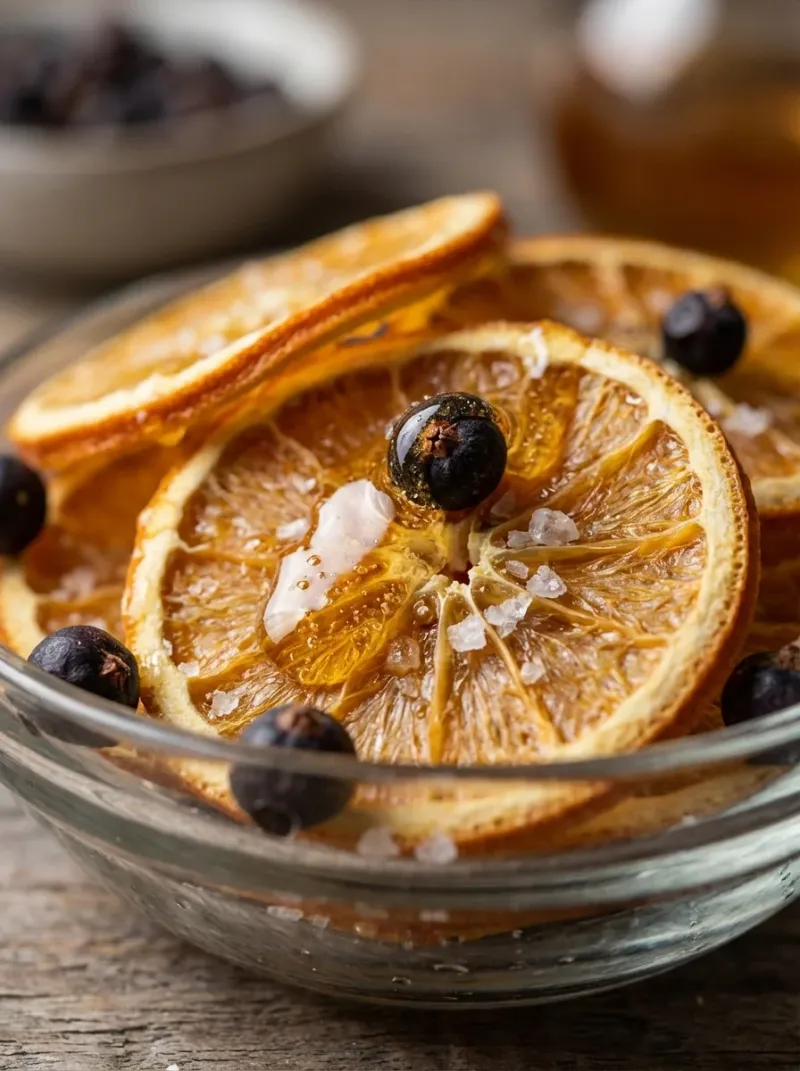
Honestly, when I first tried drying orange slices, I was amazed at how the simple fruit could transform into something that feels both rustic and refined. The honey brings a mellow sweetness, while the juniper berries add a subtle forest‑hinted complexity. It’s a snack that whispers of sunshine and cool pine forests at the same time.
The essence of the dish
Soft, slightly chewy orange ribbons coated in a thin honey glaze, dotted with the aromatic sparkle of juniper. The flavor is bright citrus with a whisper of pine.
A fun fact or historical angle
Juniper berries were once used by sailors to flavor hardtack; pairing them with citrus was a way to brighten the harsh sea diet.
Flavor or sensory focus
You’ll first notice the sweet honey, then the zest of orange, and finally the lingering pine note that makes the snack unforgettable.
You Must Know
- Dry slices uniformly for consistent texture
- Don’t over‑honey; a light coat is enough
- Juniper is potent—use sparingly
Looking back, I remember the first batch I made for a small gathering; the aroma of orange and juniper filled the kitchen. It felt like the whole house was breathing in sunshine. The snack has since become a quiet staple for tea time, never demanding more than a moment’s attention.
The story behind it
Citrus drying dates back to ancient Mediterranean traders who preserved fruit for long journeys, allowing the bright flavor of oranges to survive across deserts and seas. Juniper, prized in Nordic preserves, was historically used to ward off spoilage and add a piney note to cured foods. The combination of orange and juniper reflects a meeting of warm southern sun and cool northern forests, creating a timeless snack that bridges cultures.
Why You'll Love It
- Minimal ingredients, maximum flavor
- No oven needed, just a gentle dryer
- Natural sweetness without refined sugar
- Portable snack for any occasion
Tips for success
- Don’t overcrowd the drying trays; airflow is key.
- Allow the honey to coat evenly before sealing the jar.
- Taste the juniper before adding; a little goes a long way.
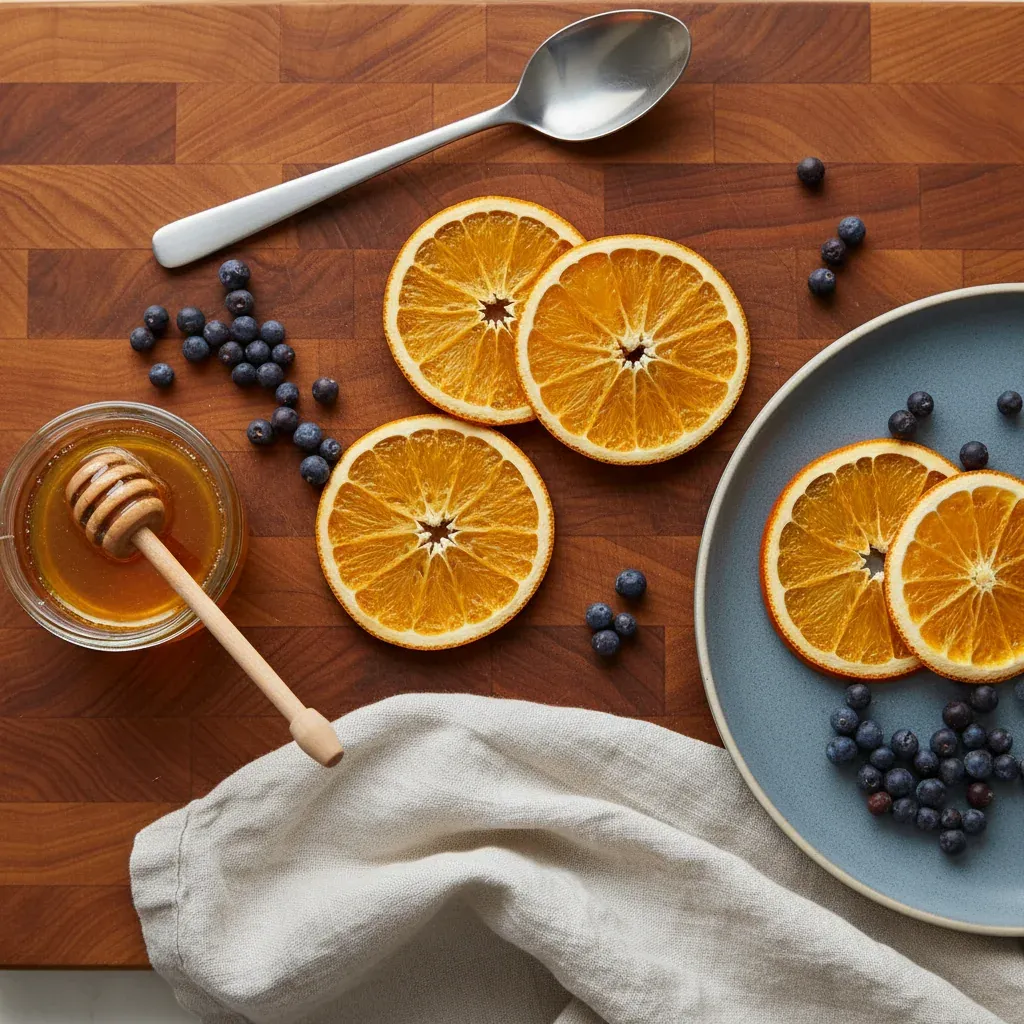
Professional secrets
- Dry in a single layer for uniform texture.
- Use a light hand with honey to avoid soggy slices.
- Crush juniper just before use to preserve volatile oils.
Common mistakes to avoid
- Over‑drying the slices, which makes them brittle.
- Using too much honey, resulting in a soggy texture.
- Neglecting to crush juniper, leading to a muted flavor.
Substitutions
- Honey: Maple syrup. Use slightly less maple syrup as it’s thinner; flavor will shift toward caramel.
- Juniper berries: Ground coriander. Provides citrusy notes but lacks the piney aroma; use half the amount.
Variations
- Spicy Version: Add a pinch of crushed red pepper flakes to the honey glaze for a subtle heat.
- Mediterranean Style: Mix in crumbled feta and a drizzle of olive oil after drying for a savory twist.
Storage
Keep in an airtight jar, layered with a paper towel to absorb excess moisture.
Make ahead
You can slice and dry the oranges up to 2 days ahead; keep them sealed, then add honey and juniper just before serving.
Leftovers
Store leftovers in the fridge; they stay tasty for up to a week, though texture may soften slightly.
Serving ideas
- Serve alongside a warm cup of tea on a cozy afternoon.
- Add to a cheese platter for a sweet‑savory contrast.
- Use as a garnish on yogurt or oatmeal for a citrus lift.
- Pack in snack bags for on‑the‑go energy bites.
Allergy information
Contains honey; ensure guests are not allergic before serving.
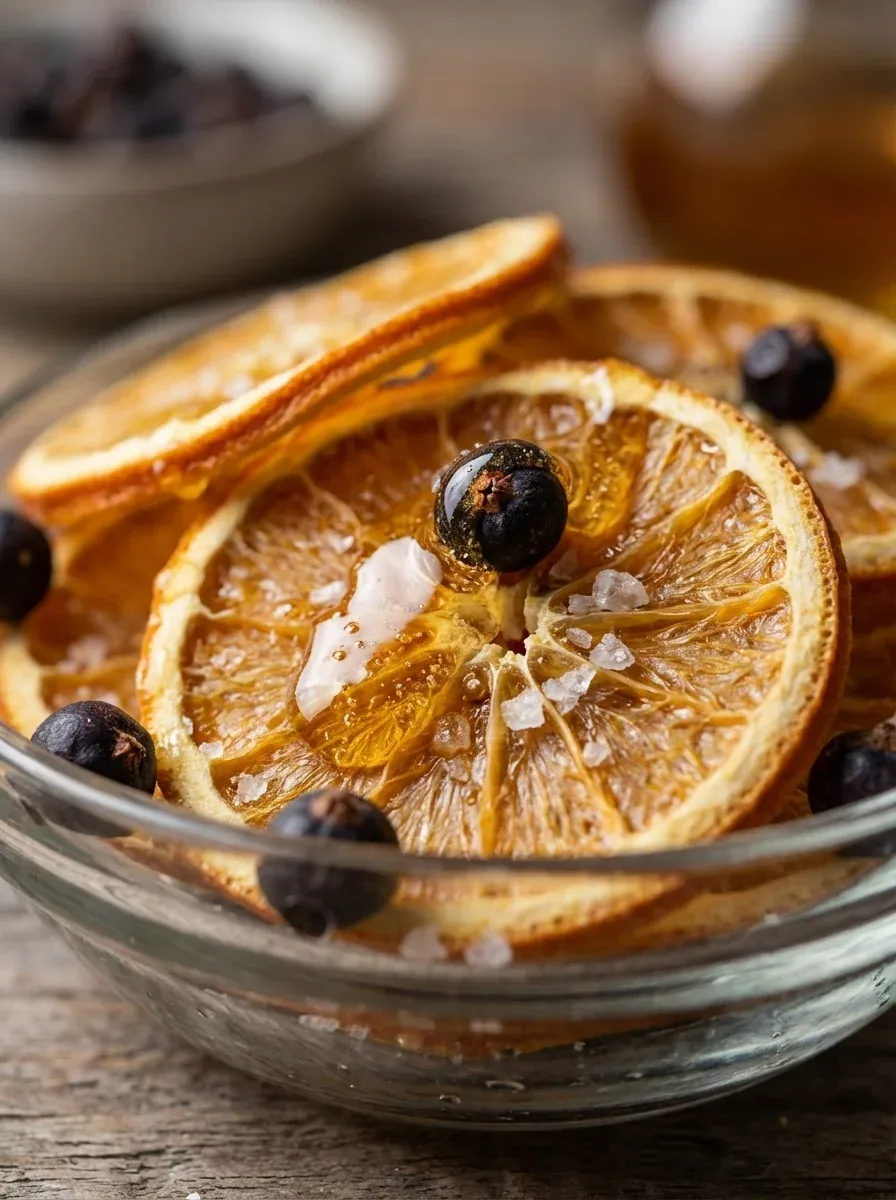
Dried Orange Slices With Honey And Juniper
A quick, aromatic snack of dried orange, honey, and juniper.
- Prep time
- 15 min
- Cook time
- 8 h
- Total time
- 8 h 15 min
- Difficulty
- Easy
- Cuisine
- Mediterranean
- Course
- Snack
Ingredients
Main Ingredients
Instructions
- 1
Preheat your dehydrator to 135°F (57°C) or set the oven to its lowest temperature. Line the trays with parchment.
- 2
Arrange orange slices on the trays, making sure they don’t overlap. Lightly brush each slice with lemon juice to keep color bright.
- 3
Dry for 6‑8 hours, checking after the first 4 hours for pliability. The edges should be slightly tacky, not brittle.
- 4
Once dried, place the slices in a large bowl, drizzle honey over them, and sprinkle crushed juniper berries, sea salt, and optional thyme. Toss gently to coat.
- 5
Transfer the coated slices to a clean jar, seal, and let sit for 30 minutes so the honey glaze sets.
Nutrition per serving
- 120 kcal
- Calories
- 1 g
- Protein
- 22 g
- Carbs
- 4 g
- Fat
Tips & notes
- If you prefer a deeper flavor, let the orange slices sit in the lemon juice for 10 minutes before drying. - Store in a cool, dark place; heat can cause the honey to crystallize. - Feel free to experiment with other herbs like rosemary for a different aroma.
Frequently asked questions
Can I use a regular oven instead of a dehydrator?
Yes, set the oven to its lowest setting (around 140°F/60°C) and keep the door slightly ajar for airflow.
How long will the slices keep?
Stored in an airtight container, they stay fresh for up to two weeks, though the honey glaze may soften them slightly over time.
Do I need to peel the oranges?
No, keep the thin outer zest; it adds flavor and color once dried.
Can I substitute maple syrup for honey?
You can, but the flavor will shift toward caramel and the glaze may be thinner.
Is juniper essential?
It provides the unique pine note; you can omit it for a pure orange‑honey snack, but the recipe shines with it.
What’s the best way to crush juniper berries?
Use a mortar and pestle or a small rolling pin; just break them enough to release aroma.

Layla
🍪🔥 A bold baker with a wild imagination — Layla mixes adventure, love, and rich chocolate in every recipe she shares. 🌈🍫