Honestly, when I first discovered sumac it felt like a tiny treasure. I remember the first time I sprinkled it over a bowl of boiled potatoes – the scent of citrus and pine rose gently. If you’re looking for a dessert to follow, the dirt cake is a fun contrast.
The essence of the dish
Crisp potatoes coated in a lemon‑sumac vinaigrette, brightened by fresh herbs and a whisper of garlic.
A fun fact or historical angle
Sumac was once a staple in ancient Persian royal courts, prized for its ability to add sourness without masking other flavors.
Flavor or sensory focus
The first bite offers a soft, buttery potato followed quickly by a tangy, citrusy snap from sumac and lemon.
You Must Know
- Season potatoes while still warm
- Do not over‑mix; coat gently
- Serve at room temperature for best flavor
These little details keep the salad from becoming soggy and let each component shine. I’ve learned that a gentle hand respects the texture, while a well‑timed rest lets the spices settle. It’s a simple dance, yet it makes all the difference when you serve the dish to friends.
The story behind it
Sumac has traveled from the Middle East to Mediterranean tables for centuries, prized for its tart, lemon‑like flavor. Historically it was used to preserve foods before refrigeration. The bright red berries are ground into a deep, ruby powder that adds a subtle sour note without the bite of vinegar. This salad celebrates that ancient spice while staying rooted in modern, home‑cooked simplicity.
Why You'll Love It
- Bright, tangy flavor that awakens the palate
- Simple ingredients, no fancy equipment
- Makes a beautiful side for any main
- Holds up well for picnics or potlucks
Tips for success
- Don’t over‑mix; gentle folding preserves potato shape.
- Season at the end to avoid over‑salting.
- Taste before adding extra lemon – the sumac already adds acidity.
Professional secrets
- Warm potatoes absorb dressing better than cold.
- Sumac releases its flavor faster when combined with acid.
- Finishing with fresh herbs adds brightness without extra cooking.
Common mistakes to avoid
- Over‑mixing the potatoes, which makes them mushy.
- Adding dressing while potatoes are too hot, causing evaporation.
- Using too much sumac, which can overwhelm the delicate flavor.
Substitutions
- Olive oil: Avocado oil. Neutral flavor, still works well with sumac.
- Lemon juice: Apple cider vinegar. Provides acidity; reduce amount slightly.
Variations
- Spicy Version: Add a pinch of red pepper flakes to the dressing for a gentle heat.
- Greek Style: Mix in crumbled feta and Kalamata olives for a Mediterranean twist.
Storage
Store in a sealed container in the refrigerator for up to two days; gently stir before serving again.
Make ahead
Boil and cool the potatoes a day ahead; store the dressing separately and combine just before serving.
Leftovers
Gently re‑toss with a little extra olive oil if the potatoes seem dry; serve chilled or at room temperature.
Serving ideas
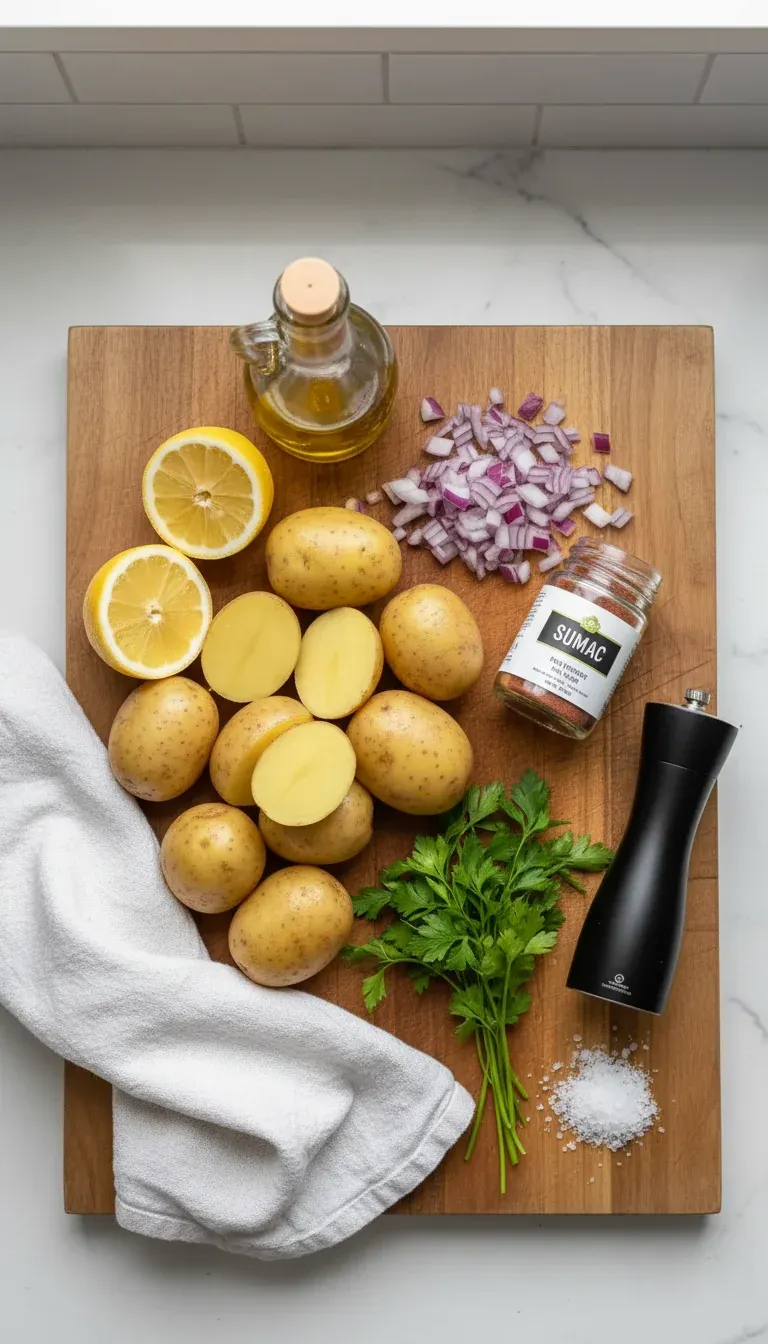
- Serve on a wooden board with a garnish of extra herbs.
- Pair with grilled halloumi for a vegetarian centerpiece.
- Add a side of crusty bread to soak up any extra dressing.
- Top with a few crumbled feta bits for extra creaminess.
Allergy information
Contains garlic and olive oil. No common allergens.

Sumac Potato Salad – Fresh & Tangy
Fresh sumac‑spiced potatoes tossed with lemony dressing and herbs, perfect for any gathering.
- Prep time
- 15 min
- Cook time
- 20 min
- Total time
- 35 min
- Difficulty
- Easy
- Cuisine
- Middle Eastern
- Course
- Side Dish
Ingredients
Main Ingredients
Optional Add‑Ins
Instructions
- 1
Place the potatoes in a pot of salted water, bring to a boil, and cook until just tender, about 12‑15 minutes.
- 2
Drain and let the potatoes cool slightly; while still warm, drizzle with olive oil and toss gently.
- 3
In a small bowl, whisk together lemon juice, minced garlic, sumac, salt, and pepper.
- 4
Pour the dressing over the warm potatoes, toss to coat evenly, then fold in fresh herbs and optional add‑ins.
- 5
Allow the salad to rest for 15 minutes at room temperature before serving. For a sweet contrast, consider a slice of cookies.
Nutrition per serving
- 210 kcal
- Calories
- 4 g
- Protein
- 28 g
- Carbs
- 9 g
- Fat
Tips & notes
- If the potatoes are too hot, the dressing can evaporate; aim for warm, not piping. - Adjust the amount of sumac to taste – a little goes a long way. - For a richer flavor, let the salad sit covered for up to an hour before serving.
Frequently asked questions
Can I use regular potatoes?
Yes, but baby potatoes hold the dressing better and have a creamier texture.
How long can I store the salad?
Keep it refrigerated in an airtight container for up to 2 days; it tastes even better after the flavors meld.
Is sumac spicy?
No, sumac is tangy and citrus‑like, not hot. It adds brightness without heat.
What if I don’t have sumac?
A mixture of lemon zest and a pinch of ground dried berries can mimic the flavor, though it won’t be identical.
Can I add other herbs?
Absolutely – dill, cilantro, or basil work well, just adjust amounts to keep the balance.
Is this salad gluten‑free?
Yes, as long as you choose a gluten‑free mustard or omit it entirely.

Layla
🍪🔥 A bold baker with a wild imagination — Layla mixes adventure, love, and rich chocolate in every recipe she shares. 🌈🍫